
Voting Rights Deformed
Why the history matters

How do you hear this statement: “Germany, there’s a complicated history there with Jewish Germans and White Germans”? I can’t mandate how one ought to hear it and, importantly, respond to it; however, I hope that your eyes widened, that your brow furrowed, that you thought and felt, at a minimum, that something is not right.
In a conversation on CNN about the rearrangement of voting maps, one of the panelists responding to a question about why the South Carolina legislature did not do as the dear leader wants, with “The South, there’s a complicated history there with Black Americans and White Americans.” He did not shout that the house was on fire, but I was jolted by the ease with which he laid out those words.
No sense of having misspoken. Nothing. Worse, his fellow panelists were similarly unbothered.
Our views and the ways we express them display how we use words, but they also expose things about us that are not conveyed by the literal meanings of our words. Characterizing White Germans’ treatment of Jewish Germans as “complicated” would, in any context, display an attitude of moral unseriousness. One cannot have learned about the Nazis’ thoroughgoing moral decrepitude, their relentless pursuit, their inventive wickedness towards Jewish Germans and Jewish people in Europe, and make such a pronouncement without emendation or apology for one’s mouth’s misalignment.
What explains the ease with which the statement was made about the American context?
Many things.
These past weeks have been awash with misdeeds: the court of record, legislatures, El Presidente, and his lynchpeople have all set forth actions that are in the service of harming large groups of people.
One of my early memories of learning about the United States’ treatment of her racialized citizens was about voting. I learned that racialized Black Americans were given “literacy tests” to determine whether they could vote, but it was the jellybean test that woke me to adults’ wickedness. I recall at the time thinking it was strange, because it meant that the people in my family who were not literate would not be permitted to vote had they lived in the US. To my child’s mind, it was wrong, unfair, though I wouldn’t have been able to say why. My parents and all the adults around my life showed me that voting was their right, and during election season they made their voices known in their campaigning and voting.
I was puzzled. How come the mighty USA, a “first-world” nation, the aspirational nation, was actively preventing her citizens from voting? I was a child, but I understood that something was very wrong.
Many years have passed since those days, and that kind of sin, but the mission of diminishing or removing racialized Black people from full involvement in American life is still alive for some Americans.
The point is not the number of Americans with such attitudes. The point is the fact of that attitude. Indeed, I am on safe ground stating that most racialized White Americans do positively want their fellow citizens to live as expansively as they do.
By any measure, the United States is a mature nation. But it portrays an outré level of immaturity about its founding history; those Fathers were the greatest men to have lived, and they designed the grandest constitution; its history with racialized people, year zero began last week, it’s too soon for a verdict. The paradox has been nurtured by a deep investment in immaturity that refuses to meet the history it has in all its awfulness and its grandeur.
In some telling, it is a mystery why racialized people are too often ill at ease in their own land. That they seek to return to “their motherland”. That they are untrusting of their governments. To be puzzled is to be dishonest.
Our Supreme Court, and its Chief Justice Roberts’ protestation that his job is to call balls and strikes, displays moral callousness or cognitive impairment. Since we know that they are versed in the history of this land and the particular ills that the Voting Rights Act of 1965 was an amelioration for, we cannot judge their actions to have been borne from their not knowing. We also know that they are not cognitively impaired, in the ways that matter, to adjudicate cases about voting rights.
The candidate conclusion is that the justices, in sanctioning the flaying of the voting law, did so for bad reasons –morally bad reasons. They will have the stamp of misdeeds on their records, though we know in due course they will write books and give speeches beseeching their audiences to believe them that they acted within the constitution and in so acting they did good.
The United States and successive administrations decided that the rupture that began with the taking of Native people’s land, the trafficking of human beings across oceans resulting in degradation, suffering, death, enslavement, rape, more deaths, violations of rights given to others, unequal treatment, more deaths…, is not worthy of a truth and reconciliation style process.
No repentance.
No federal courage shown for this kind of bloody and painful history.
But the expectation is that this can be a nation of people with an expressly shared history.
It cannot!
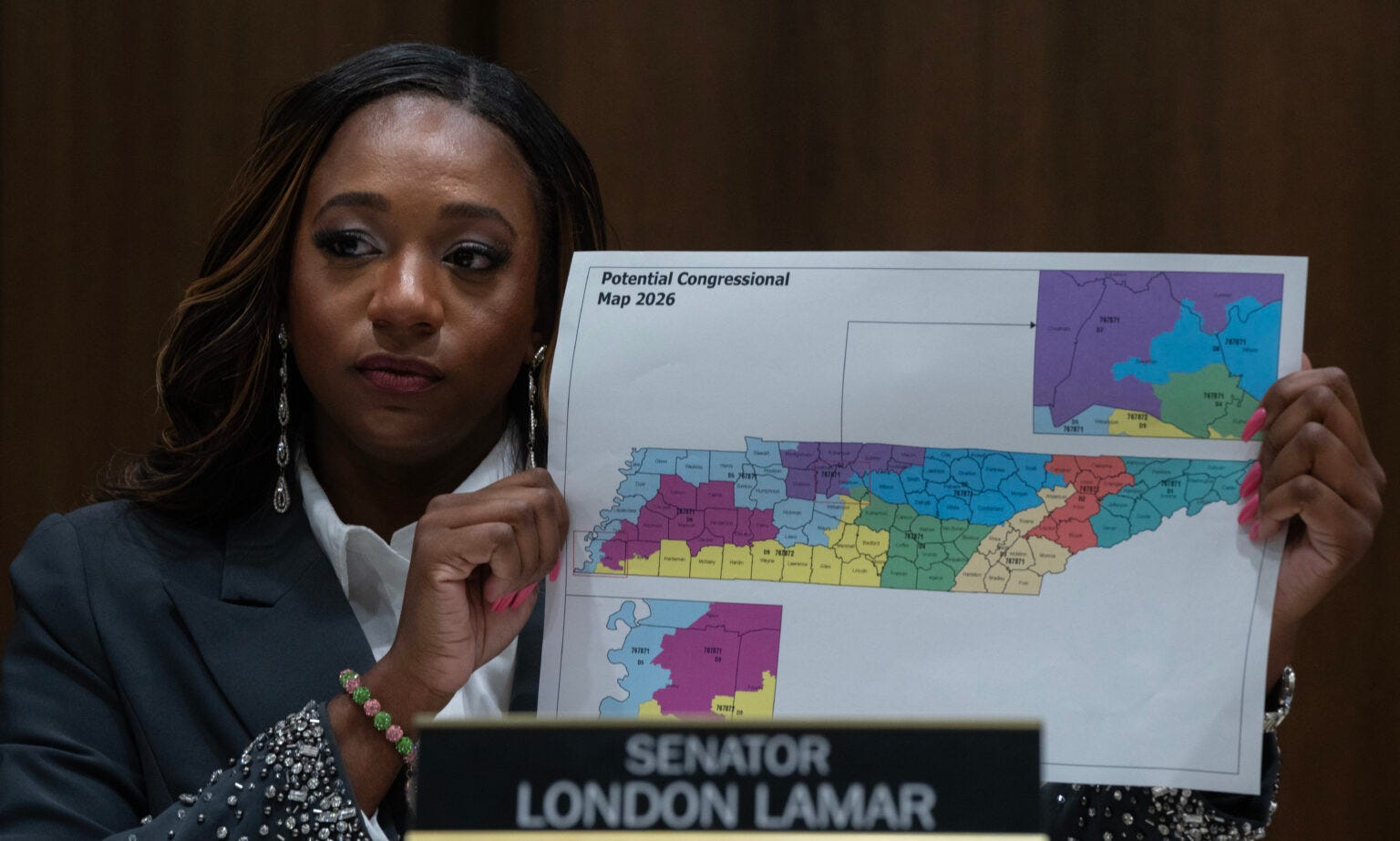
The problem of disenfranchisement suffered by racialized Black people was supposed to be fixed by the 1965 law. But voting-pool reduction remains an aim for some people. The act is still supposed to be that bulwark against the push to suppress. That racialized Black people and people in the numerical minority vote as a block must be understood in the context of this country’s history. The court ought to have known that their surgery to a portion (Section 2) of the VRA would have resulted in unnavigable maps, but for wins to the party of choice.
If the courts deem it, then it is legal, but that some act is covered under legal sanction does not mean that it is good, for the polity, for how we live with each other, and for whether the rupture at the core of American life can ever be fused.
New maps are emerging; we should expect those sanctioned by state houses to yield results that were sought. Racialized Black Americans and racialized White Americans in southern states don’t have a “complicated” history. It’s a history laden with suffering, pain, and death, and I’m sure joy. That history did not die.